
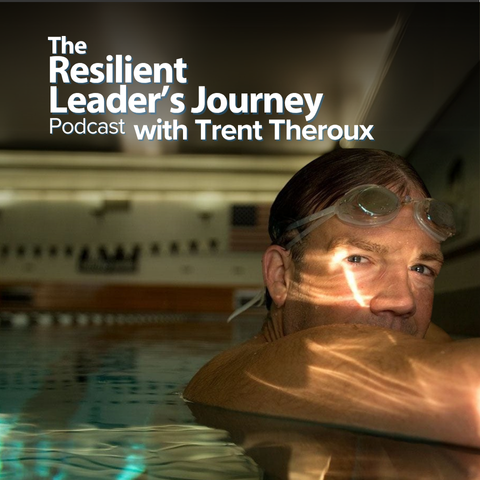

I was underwater, on my back, arms locked above my head, thrusting with my hips and legs. I could feel the burn of water leaking up my nose. I touched the wall gasped for a breath, took a look at the clock, and went back under again towards the other side of the pool.
Again, and again and again. Water burning up my nose as I would run out of air to hold it back. Twenty years later we would hear about waterboarding in Guantanamo Bay. Today I was experiencing it. Actually, I was experiencing it every day for the past two weeks and it didn’t feel like I was getting any faster. There was something missing in my movements that made me move more like a dachshund than a dolphin.
Practice would end and I would head for the showers to begin the process of reverse osmosis. I would sit on a stool in front of the shower stall with my head tilted toward the drain and wait. Most days it would take less than a minute to allow my sinuses to drain all the pool water it accumulated. Folks, it was a gross process and I’m kind of embarrassed just telling you what I went through to try to gain a little extra speed under the water during backstroke races.
Reflecting on this daily process maybe I should have considered more about how to build a nasal filtration system like Navage than swimming.
Welcome to Swimming in the Flood; a podcast where we develop the resilient leader’s mindset by navigating difficult currents in business. My name is Trent Theroux.
Six Sigma is a methodology that focuses on improving processes by reducing defects and variations, ultimately aiming for near-perfect quality. Developed by Motorola in the 1980s, it has since become a widely adopted approach across various industries. The name “Six Sigma” comes from statistical concepts, where “sigma” represents the standard deviation from the mean in a normal distribution. That’s the curve you always wanted your calculus teacher to grade you on.) Achieving Six Sigma quality means having only 3.4 defects per million, per million opportunities, showcasing a high level of process capability.
At the core of Six Sigma is DMAIC. It’s an acronym which stands for: Define, Measure, Analyze, Improve, and Control. Let’s delve into each phase and see how it played a crucial role in Motorola’s success story.
- Define: This phase involves identifying the problem, setting project goals, and understanding customer requirements. Motorola, facing intense competition in the telecommunications industry, aimed to enhance product quality and customer satisfaction. They defined critical metrics like call drop rates and customer complaints to measure performance.
- Measure: In this phase, data is collected to quantify the current process performance. Motorola used statistical tools to gather data on defect rates, cycle times, and other relevant metrics. This step provided a baseline for comparison and highlighted areas needing improvement.
- Analyze: Once data is collected, it’s analyzed to identify root causes of defects and variations. Motorola employed techniques like cause-and-effect diagrams, Pareto charts, and hypothesis testing to pinpoint issues. For example, they discovered that equipment calibration problems contributed significantly to defects in their manufacturing processes.
- Improve: Armed with data and insights, the improvement phase focuses on implementing solutions to address identified issues. Motorola trained employees in problem-solving methodologies and encouraged a culture of continuous improvement. They introduced new processes, such as statistical process control (SPC) and error-proofing techniques, to reduce defects and variability.
- Control: The final phase ensures that improvements are sustained over time. Control mechanisms like process monitoring, standard operating procedures, and employee training were put in place at Motorola. They established quality control checkpoints to prevent regressions and maintain Six Sigma levels of performance.
Motorola’s adoption of Six Sigma led to significant benefits. They experienced reduced defects, improved product quality, increased customer satisfaction, and streamlined processes. For instance, by reducing defects in their manufacturing lines, they saved millions of dollars annually and gained a competitive edge in the market.
Furthermore, Six Sigma principles transcended Motorola and influenced the entire business world. Companies like General Electric, Ford, and IBM embraced Six Sigma methodologies, driving widespread adoption and further refining the approach. Six Sigma’s success at Motorola showcased the power of data-driven decision-making, continuous improvement, and customer-centricity, shaping modern quality management practices across industries.
The simple question you are asking right now is – Trent what does six sigma have to do with waterboarding yourself when you were twenty. I’m glad you asked…
I am now going to give you my unscientific, non-peer reviewed, resilient leader theory on utilizing six sigma. Are you ready? Got your pencils out? Here’s it is. Streamline Your Process. You heard it. Streamline your Process. The theory is easy. Here’s how it works.
When I was in college, I watched a Harvard swimmer named David Berkoff swim the 100-yard backstroke. I was warned ahead of time that Berkoff swam backstroke differently than anyone ever had. Silly me, my first thought was that Berkoff would use two arms at the same time, like a reverse butterfly stroke. I was wrong.
Berkoff was in lane four for the start of the 100-backstroke, that’s four lengths of the pool. He had a good start. He made a good reverse arch and a clean entry into the water. The other swimmers came up out of the water and began swimming, but Berkoff was nowhere to be found. It looked like lane four was missing his swimmer. Then he emerged. Berkoff was two body lengths ahead of the next swimmer and he hadn’t swum yet. Well, he was swimming. It was just underwater. Berkoff took one arm stroke touched the wall and did the same in reverse. The crowd started a chant, more like an ohm with a louder and rising pitch which crescendo when Berkoff broke the surface. He did the same for the next two lengths. In total, Berkoff made ten strokes with his arms. Ten! By comparison, I would have used ten strokes before I reached the first set of flags. And he won by half a pool length. It was utterly amazing.
Berkoff’s introduction of this technique fundamentally changed the backstroke event. By utilizing powerful underwater kicks, he maximized propulsion and minimized resistance, allowing him to swim faster and more efficiently. The innovation was dubbed the Berkoff Blast. Berkoff set world records and won a gold medal at the Soeul Olympics.
Berkoff didn’t develop this technique overnight. No, it took a little six sigma to perfect the innovation. Here’s how.
First, he Defined the problem. How best to reduce drag while swimming backstroke. The solution to staying under the water was an anathema of the prevailing logic. We were taught at the time that moving your body through air was faster than moving through water. We wanted as much of our body out of the water as possible.
Second, Berkoff’s coaches timed him repeatedly from the start for varying distances, collecting as much data as possible.
Third, Berkoff analyzed the data, with the help of the Harvard physics department to create a distribution curve that highlighted the sample which yielded the maximum distance before speed declined.
Fourth, with the game plan in hand, Berkoff and his coaches created training programs to capitalize on the innovation and improve on the model. They constantly measured the progress and set new benchmarks after each successive level had been surpassed.
Last, Berkoff’s team controlled the process. Training for the Olympics is a couple year grind and it’s easy to regress into some bad habits from exhaustion or mental fatigue. With the right data in hand, Berkoff was able to identify how his body was reacting to training and able to make adjustments to ward off bad days in the pool.
Motorola and Berkoff were studs of the 1980s. Using the DMAIC principles each was able to change outcomes through statistical process control.
Folks, thank you for listening to Swimming in the Flood. Resilient leaders face challenging currents, and it is tough navigating, but with one tack or another, we can get there together.